At its heart, the entourage effect is a simple but powerful idea: cannabis compounds work better together than they do alone.
Imagine a symphony orchestra. A solo violin—let’s call it pure THC—can play a beautiful melody. But you only get that rich, powerful, and deeply moving sound when the entire orchestra of cannabinoids, terpenes, and flavonoids plays in perfect harmony. This natural teamwork is the key to a more balanced, effective, and complete cannabis experience.
What Is the Entourage Effect: A Practical Guide
Have you ever tried two different cannabis strains with the exact same THC percentage, only to find they feel worlds apart? One might leave you feeling creative and focused, while the other melts you into the couch. That’s not a coincidence—it’s the entourage effect in action.
The concept is that the therapeutic power of the whole cannabis plant is far greater than the sum of its isolated parts. Instead of focusing on a single compound like THC or CBD, this theory highlights the incredible synergy that occurs when all of the plant’s natural components work together within your body. This collaboration unlocks a spectrum of effects that a single molecule simply can’t replicate.
Meet the Key Players
The cannabis plant is a complex chemical factory, producing hundreds of active compounds that each play a unique role. To truly grasp what the entourage effect is, you need to know the main contributors to this botanical team.
- Cannabinoids: These are the headline acts of the cannabis world, including THC (tetrahydrocannabinol) and CBD (cannabidiol). THC is known for its psychoactive effects, while CBD is celebrated for its non-intoxicating, therapeutic properties. But they’re just two of over 100 known cannabinoids, like CBG and CBN, each adding a unique dimension.
- Terpenes: Ever wonder what gives a cannabis strain its distinct aroma and flavor? That’s the work of terpenes. These aromatic oils create scents ranging from zesty citrus and sharp pine to earthy, floral notes. But they do more than please the senses—terpenes have their own therapeutic effects and can significantly influence how cannabinoids interact with your body.
- Flavonoids: Found throughout the plant kingdom (in foods like blueberries and green tea), flavonoids are responsible for pigmentation and also contribute powerful antioxidant benefits. In cannabis, they work behind the scenes, supporting the effects of cannabinoids and terpenes to round out the plant’s overall therapeutic profile.
Practical Example: The interaction between THC and CBD is a perfect showcase of the entourage effect. CBD is known to temper some of THC’s more intense psychoactive effects. This means a product containing both compounds can offer a smoother, more balanced high with less risk of anxiety—a practical benefit for anyone sensitive to pure THC.
To help you visualize this synergy, here’s a quick rundown of the main players in the cannabis symphony.
Key Players in the Cannabis Symphony
| Compound Type | Primary Role | Example |
|---|---|---|
| Cannabinoids | Directly interact with the body’s endocannabinoid system | THC (psychoactive), CBD (non-psychoactive) |
| Terpenes | Provide aroma and flavor; modify cannabinoid effects | Myrcene (relaxing), Limonene (uplifting) |
| Flavonoids | Contribute to color and provide antioxidant support | Cannaflavin A, Quercetin |
This delicate interplay is why different strains produce such a vast spectrum of effects. The specific ratio of cannabinoids to terpenes dictates the final outcome and is a major reason the classic distinction between Indica and Sativa can feel so distinct.
By understanding this synergy, you can move beyond simple THC percentages and start making more informed choices to find the precise experience you’re looking for.
How Cannabis Compounds Work Together in Your Body
To truly understand what the entourage effect is, you have to look beyond the buzzwords and into the fascinating science of how cannabis interacts with our bodies. It all centers on a brilliant internal network called the endocannabinoid system (ECS).
Think of the ECS as your body’s master regulator, constantly working behind the scenes to maintain balance—a state scientists call homeostasis. It helps manage critical functions like mood, appetite, pain sensation, and memory.
The ECS operates through a system of locks (receptors) and keys (endocannabinoids). Your body produces its own keys that fit perfectly into locks located throughout your brain, organs, and immune system. When a key clicks into a lock, it sends a signal that helps keep that system running smoothly.
So, how does cannabis fit in? The plant’s compounds, like THC and CBD, are remarkably similar to our body’s own keys. They act as master keys that can also unlock these receptors.
A Symphony of Interactions
When you consume cannabis, its hundreds of compounds don’t just act independently. They influence each other, creating a dynamic, interactive experience.
Take THC, for instance. It binds directly to the CB1 receptors in your brain, which produces the classic psychoactive “high.” But CBD plays a different role. It doesn’t bind as strongly, but it can subtly change the shape of the receptor, making it harder for THC to latch on.
This is a perfect illustration of the entourage effect:
- CBD can moderate THC: By getting in the way, CBD can dial down THC’s intensity. This is why many people find that balanced products help reduce the anxiety or paranoia that can sometimes accompany high-THC strains.
- Terpenes steer the experience: The aromatic terpenes add another fascinating layer. A terpene like myrcene, known for its relaxing effects, can team up with cannabinoids to create a deeply calming vibe. In contrast, the zesty terpene limonene might enhance the experience, making it feel more uplifting and energetic.
The term “entourage effect” was first introduced in 1998 by researchers who observed that certain compounds, even if inactive on their own, could amplify the effects of others when present together. You can learn more about its origins on Wikipedia’s entry on the entourage effect. This foundational concept helps explain why whole-plant medicine often feels more effective.
Why Whole-Plant Matters
This synergy is precisely why consuming products made from the whole understanding cannabis flower can feel more balanced and effective than taking an isolated molecule like pure THC or CBD. Every cannabis strain has a unique chemical signature—a distinct recipe of cannabinoids and terpenes that shapes its effects.
Actionable Insight: If you’re looking for focus, a strain high in THC and the terpene pinene (known for alertness) might be a great choice. But if you need to unwind, a strain with the same THC level but high in linalool (the terpene also found in lavender) could provide a profoundly relaxing experience. It’s this teamwork that unlocks the plant’s true potential.
Choosing Products: Full-Spectrum, Broad-Spectrum, and Isolate
Walking into a dispensary today means facing a wave of terms like “full-spectrum,” “broad-spectrum,” and “isolate.” What do they mean, and how do you choose the right one for your goals? Understanding these labels is the key to harnessing the entourage effect and finding a product that truly works for you.
Think of these categories as describing how much of the plant’s natural chemistry is preserved in the final product. Each offers a different level of teamwork, directly shaping the effects you’ll feel.
Full-Spectrum: The Whole Plant Experience
A full-spectrum product delivers the complete, unadulterated profile of the cannabis plant. This means you get all the cannabinoids (including THC), all the terpenes, and all the minor compounds working in concert, just as nature intended.
By keeping the entire team intact, full-spectrum products offer the most powerful entourage effect. This is the whole orchestra playing in perfect harmony. If you are comfortable with THC and want the maximum therapeutic benefits of the plant, this is your go-to choice. You can learn more about what is full-spectrum cannabis in our detailed guide.
This visual illustrates how the potential for synergy grows as you incorporate more of the plant’s natural compounds.

The takeaway is clear: the closer you are to the whole plant (full-spectrum), the more you leverage the power of compounds working together for a superior result.
Broad-Spectrum: Strong Synergy, Minus the THC
Next is broad-spectrum. This is the ideal middle ground for many. A broad-spectrum extract starts as a full-spectrum oil but undergoes an extra step to specifically remove the THC.
You still benefit from a rich blend of cannabinoids and terpenes, which means you get a robust entourage effect. This makes it an excellent option for anyone who wants the synergistic benefits of the plant but must avoid THC due to work, personal preference, or legal restrictions.
It’s like having the full orchestra without the lead vocalist. You still experience a rich, complex performance, but the primary psychoactive element is absent.
Isolate: A Solo Performance
Finally, we have isolate. An isolate is a single cannabinoid, such as CBD or THC, purified to its crystalline form. Everything else—other cannabinoids, terpenes, and plant matter—is stripped away, leaving a powder that is over 99% pure.
As a single molecule, an isolate cannot produce an entourage effect. It’s a solo act. This is the right choice for individuals who require a precise, high-purity dose of a specific cannabinoid or are sensitive to other plant compounds. The effects are predictable but lack the nuanced complexity of a full-ensemble product.
Comparing Cannabis Extract Types
To make your decision easier, here’s a simple table to help you choose the right product type for your needs.
| Product Type | Key Compounds Included | Entourage Effect Potential | Best For… |
|---|---|---|---|
| Full-Spectrum | All cannabinoids (including THC), terpenes, and flavonoids. | Highest | Users who want the full, synergistic benefits of the entire plant and are comfortable with THC. |
| Broad-Spectrum | Multiple cannabinoids and terpenes, but with THC removed. | Medium to High | People who want the entourage effect but must avoid THC for personal or professional reasons. |
| Isolate | A single cannabinoid (like CBD or THC) and nothing else. | None | Individuals needing a precise, high-purity dose of a specific cannabinoid or those with sensitivities. |
Ultimately, understanding these differences puts you in control. You can move beyond just looking at THC or CBD percentages and start choosing products based on the holistic experience you want to achieve.
Scientific Evidence Supporting the Entourage Effect
For years, the entourage effect was more of an anecdotal theory than a scientific certainty. It made sense intuitively, but where was the hard proof? As cannabis research accelerates, scientists are finally providing clear, measurable data that proves this synergy is not just a theory—it’s a real, physiological phenomenon.
The concept has officially graduated from cannabis culture lore to legitimate science. Researchers are now using cutting-edge technology to move past personal stories and into quantitative evidence, validating what many have long believed: the whole plant is greater than the sum of its parts.
From Theory to Tangible Data
The first clues emerged from clinical observations. Patients frequently reported better outcomes with whole-plant cannabis extracts compared to single-compound pharmaceuticals like Marinol (a synthetic THC pill). These reports were compelling, but now science is measuring the body’s response directly.
One of the most exciting breakthroughs comes from using electroencephalogram (EEG) technology to map brain activity. This allows researchers to observe in real-time how different cannabis formulations alter the brain’s electrical signals.
Trustworthy Insight: By comparing the brain’s response to pure THC versus full-spectrum cannabis, scientists can pinpoint how the “entourage” of other compounds neurologically changes the user’s experience.
A landmark 2023 study did just that, using AI-powered EEG to analyze the brain’s reaction. The results were clear: a full-spectrum product produced a significantly faster, stronger, and longer-lasting effect than pure THC alone. While isolated THC took roughly four minutes to register a significant effect, the full-spectrum cannabis delivered a more powerful and sustained experience, providing concrete data to back the entourage effect. You can explore the findings of this groundbreaking marijuana study on Marijuana Moment.
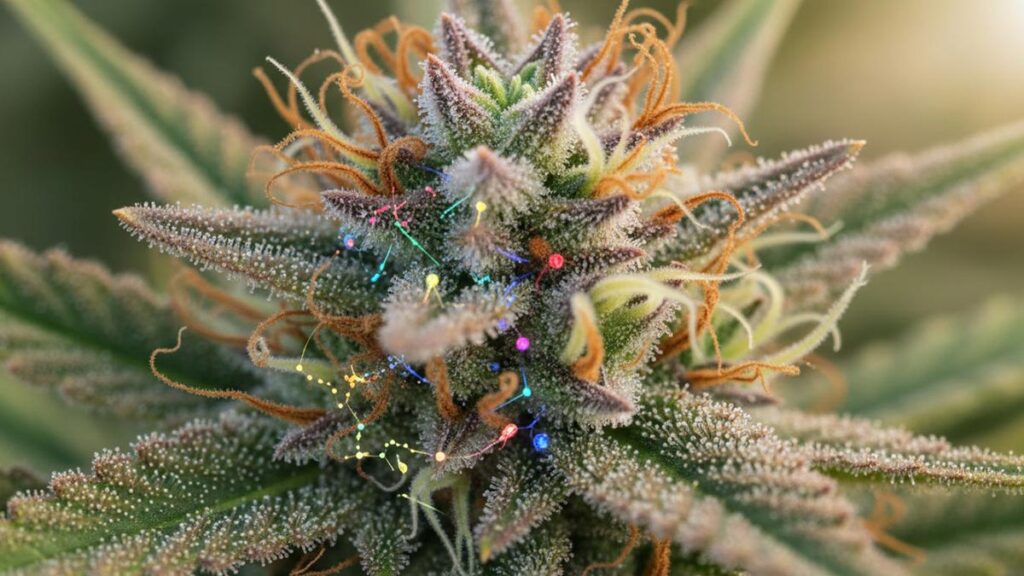
This diagram illustrates how cannabinoids like THC and CBD, along with terpenes, all interact with our body’s receptors. Together, they produce a combined effect that is profoundly different from what any single compound could achieve alone. It’s the perfect visualization of the “teamwork” at the core of the entourage effect.
Building a Stronger Case
This type of research is a game-changer. It establishes a solid, evidence-based foundation for the entourage effect, elevating it from a plausible theory to a scientifically validated phenomenon. Each new study adds another piece to the puzzle, helping us understand the precise mechanics of how these compounds enhance and balance one another.
This growing body of science drives home a crucial takeaway for consumers: the complete chemical profile of a cannabis product is far more important than its THC percentage alone. Armed with this knowledge, you can look beyond the big numbers to choose products that offer a more complete, effective, and tailored experience.
Practical Benefits for Wellness and Medical Use

The science is compelling, but what does the entourage effect actually do for you in the real world? It all comes down to tangible benefits, whether you’re managing a medical condition or simply aiming to improve your daily wellness. This natural synergy is why so many people find that whole-plant products are simply more effective.
When you get down to it, the practical applications are what matter most. Instead of one compound working in isolation, you have an entire team of cannabinoids and terpenes collaborating to produce a more effective and balanced result.
Creating a More Balanced Experience
One of the most immediate benefits of the entourage effect is its ability to smooth out the cannabis experience—a game-changer for anyone sensitive to THC’s intensity. Have you ever felt anxious or edgy from a high-THC product? This is where that botanical teamwork shines.
It is well-documented that CBD can moderate the sometimes-overwhelming psychoactive effects of THC. Think of it as a natural buffer. By interacting with cannabinoid receptors, CBD can soften the “high,” making the experience more manageable and less likely to trigger unwanted side effects.
This teamwork means a full-spectrum product often delivers a more well-rounded feeling of calm, creativity, or relief, avoiding the jarring intensity that can come from isolated THC. This also makes products like tinctures incredibly versatile for customized daily use. If you’re interested in creating your own blends, you can learn how to make a cannabis tincture with full-spectrum flower.
The key benefit is control: The entourage effect helps tailor the cannabis experience to your needs, transforming a potentially overwhelming compound into a more focused and therapeutic tool. It’s the difference between a loud solo and a perfectly harmonized choir.
Superior Outcomes in Medical Applications
The advantages of this synergy become even more pronounced in medical applications. A growing body of research indicates that whole-plant extracts often outperform single-cannabinoid drugs when treating specific health conditions. For patients, this translates to more consistent and significant relief.
A powerful example is in epilepsy management. A major 2018 meta-analysis of 670 individuals found that whole-plant, CBD-rich cannabis extracts provided better seizure control than purified CBD alone. The conclusion was clear: the combined action of multiple cannabinoids and terpenes created a more potent therapeutic effect. You can learn more about these medical cannabis findings on Medical News Today.
This principle extends to numerous other conditions:
- Pain Management: Combining THC and CBD with anti-inflammatory terpenes like caryophyllene can target pain from multiple angles simultaneously.
- Anxiety and Mood: Terpenes like limonene (known for its uplifting properties) and linalool (known for its calming effects) can work with cannabinoids to promote a more stable, positive mood.
- Sleep Support: When cannabinoids like CBN are paired with sedative terpenes like myrcene, the result is often a more effective and natural sleep aid than any single compound can provide.
Ultimately, understanding the entourage effect empowers you to move beyond single-ingredient thinking. It’s about embracing the complete, synergistic power of the plant to achieve superior health outcomes.
Your Questions About the Entourage Effect, Answered
Even after covering the basics, it’s natural to have more questions about how these cannabis compounds collaborate. It’s a complex topic! Let’s address some of the most common inquiries about the entourage effect and what it means for your choices.
Think of this as your quick-reference guide to feel more confident when selecting cannabis products.
Does the Entourage Effect Work with CBD Products?
Yes, absolutely. The entourage effect is not exclusive to THC. When you choose a full-spectrum or broad-spectrum CBD product, you’re getting a formula packed with other beneficial cannabinoids (like CBG and CBN) and terpenes that work as a team to amplify CBD’s effects.
Practical Example: A full-spectrum CBD oil might contain the terpene linalool—the same aromatic compound found in lavender. Linalool is known for its calming properties. When combined with CBD, the two can produce a more potent soothing effect than either could alone. This is a key reason why many people report that full-spectrum CBD is more effective for them than a CBD isolate.
The core idea is that the entourage effect is about teamwork. It applies to any product that features a rich blend of cannabis compounds, regardless of whether THC is the main component. The goal is always a more balanced and complete experience.
How Can I Find Products That Give Me the Best Entourage Effect?
To maximize your experience with the entourage effect, look for products labeled “full-spectrum” or “live resin/rosin.” These terms are your signal that the product was crafted to preserve as much of the original plant’s chemical profile as possible.
- Full-Spectrum: This indicates the product contains the complete range of cannabinoids and terpenes from the source plant, including trace amounts of THC.
- Live Resin/Rosin: These premium concentrates are made from cannabis plants that are flash-frozen immediately after harvest. This process excels at preserving the delicate terpenes that are often lost during traditional drying and curing.
Actionable Tip: Before buying, always ask for a Certificate of Analysis (COA). This lab report provides a detailed breakdown of the product’s contents, showing you the exact profile of cannabinoids and terpenes you’re getting.
Are There Any Downsides to This?
The primary consideration is variability. Because every cannabis strain possesses a unique chemical fingerprint, the experience can differ more than with a single, isolated compound. One full-spectrum product might feel deeply relaxing, while another with a similar THC level could be surprisingly energizing due to its terpene profile.
Additionally, if you are highly sensitive to THC, even the small amount in a full-spectrum product could produce mild psychoactive effects. The golden rule is always to “start low and go slow.” Begin with a very small dose of any new product to see how your body responds to that specific blend before consuming more.
Is the Entourage Effect Actually a Scientific Fact?
The entourage effect is a well-supported scientific theory, backed by a growing body of preclinical research and overwhelming anecdotal evidence from patients and consumers. However, in the strictest scientific sense, it is not yet “proven” with the same certainty as gravity.
The main challenge for researchers is the plant’s immense complexity. With over 100 cannabinoids and even more terpenes, the number of potential chemical interactions is staggering. This makes it incredibly difficult to design conventional clinical trials that can isolate every interaction. While the scientific community widely agrees that these compounds work synergistically, the exact mechanisms for every combination are still being mapped out.
At VT Strong Cannabis Dispensary, our team is passionate about helping you navigate this. We are firm believers in the power of the whole plant and focus on sourcing Vermont’s finest craft products that let the entourage effect shine. Visit our shop in Barre or browse online to discover a curated selection designed to help you achieve your wellness goals. Find out what a difference quality and community can make at https://vtstrongcannabis.com/store/.