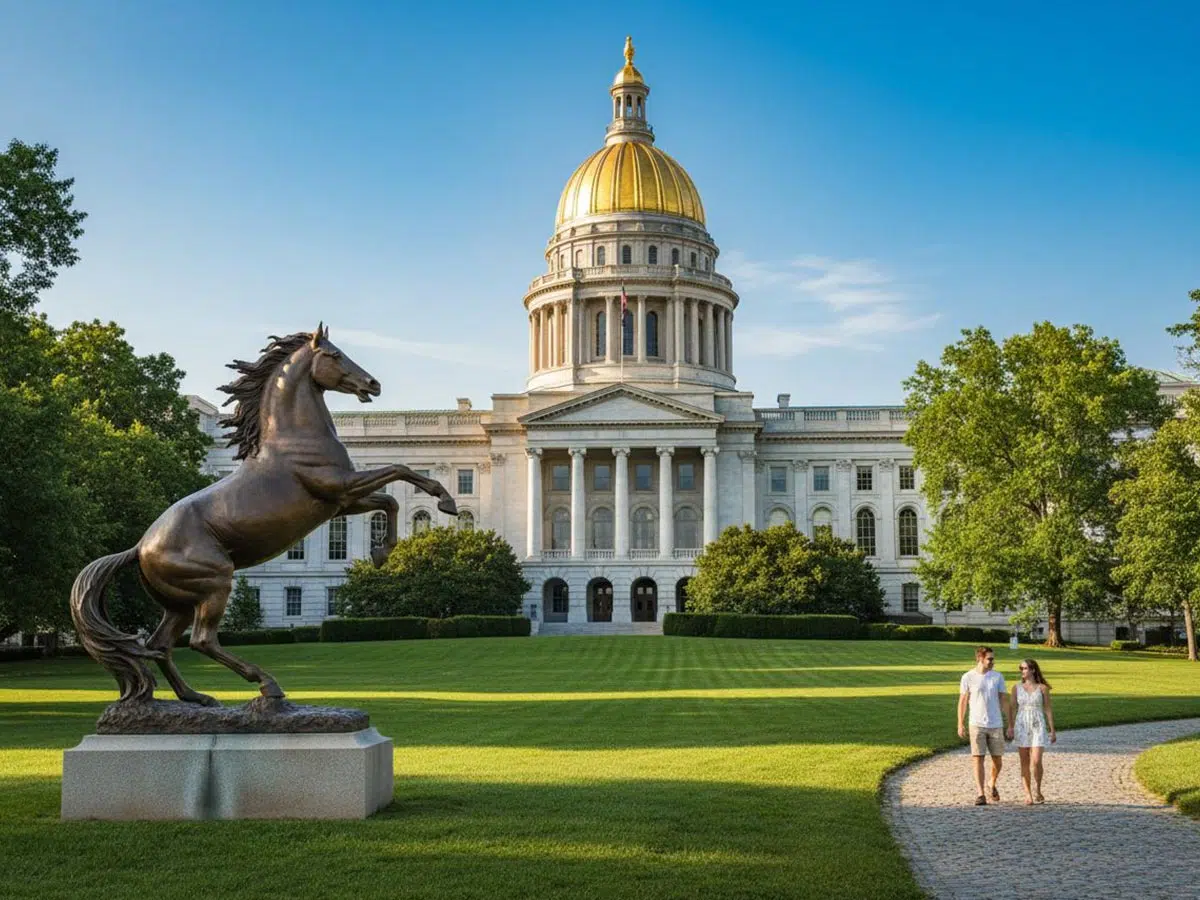
Imagine strolling through Montpelier when a brilliant gold dome seemingly emerges from a lush, green hillside. That’s your first breathtaking glimpse of the Vermont State House, the undeniable heart of the Capitol grounds, Montpelier, VT. This isn’t just another government building; it’s a living museum and a vibrant public park where history, nature, and community life converge.
Discover the Historic Heart of Montpelier
The Capitol grounds are a masterful blend of formal landscaping, commanding historic monuments, and the rugged natural beauty for which Vermont is renowned. Whether you’re a history aficionado, a family seeking a fun and educational outing, or simply looking for a peaceful escape in Vermont’s capital, this guide is your key. Prepare to explore a place where every statue tells a story and every path unveils a new piece of Vermont’s soul.
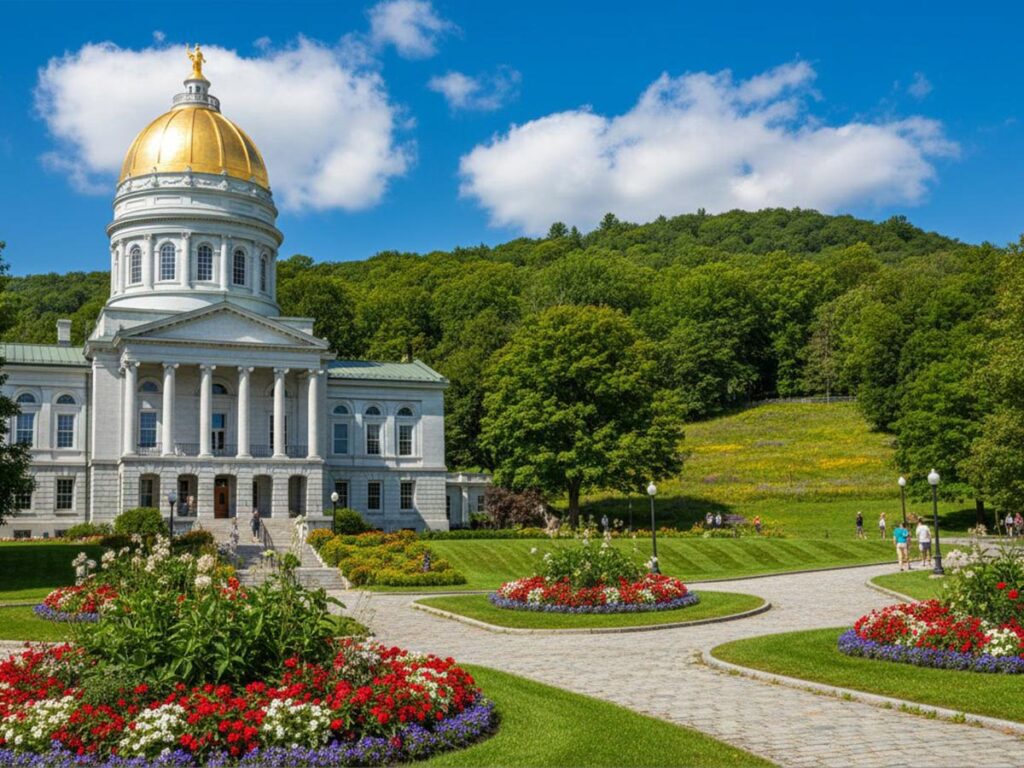
The State House is perfectly positioned on the western edge of downtown Montpelier, near the Winooski River. This was no accident. The location was intentionally chosen to frame the building against a wooded hillside—once simple pasture land when the State House was first built. As you wander the grounds, you’re treading on land that has been central to the city’s civic life for over a century. In fact, a detailed survey from 1913-1914 confirms that the thoughtful, inviting layout you see today was already well-established back then, a testament to its enduring importance.
What Makes the Grounds a Must-Visit Destination
This is not your typical state capitol experience. The grounds here are designed with a clear purpose: to be a central hub for locals and visitors alike. It’s not just about passively viewing a beautiful building; it’s about actively engaging with Vermont’s past and present.
Here’s a snapshot of what awaits you:
- Architectural Majesty: The stunning Greek Revival architecture of the State House is the main draw, perfectly framed by manicured lawns and vibrant, meticulously cared-for gardens.
- Monuments with a Message: Dotting the lawns are statues and memorials, each offering a powerful lesson in Vermont’s fascinating and often rebellious history.
- A True Public Park: The grounds are a dynamic community space. On any given day, you’ll find people relaxing, picnicking, or enjoying year-round events, from bustling farmers’ markets to local festivals.
The grounds are more than just a backdrop for the State House; they are a destination in their own right, inviting exploration and reflection at every turn.
This unique combination makes the capitol grounds Montpelier VT an unmissable stop. If you’re planning a broader tour of the region, this map of other local attractions can help you connect the dots. The space masterfully merges the official business of the state with the daily life of its people, creating an atmosphere that is both special and profoundly welcoming.
Step Inside the Vermont State House
While the grounds are a destination in themselves, the undisputed star of the show is the Vermont State House. This is far more than a government building. It’s a breathtaking work of architecture that functions as a time capsule, connecting you directly to the state’s long and storied past. With its radiant gold leaf dome and grand Greek Revival design, it’s a landmark that demands your attention.
As you ascend the main path, your eyes are irresistibly drawn to the dome’s peak. Perched atop is a statue of Ceres, the Roman goddess of agriculture. Her presence is not merely decorative; it’s a potent symbol of Vermont’s deep agricultural roots, a theme that has defined the state for generations. This thoughtful blend of impressive design and meaningful detail is what truly sets the State House apart.
The building is also a testament to Vermont’s resilience. The structure you see today, completed in 1859, is actually the third State House on this site. Its predecessor was tragically consumed by a fire in 1857—a common fate for large buildings of that era. Architect Thomas Silloway was tasked with the reconstruction, ingeniously preserving key elements of the original while creating the iconic building that stands today. You can dive deeper into the State House’s architectural journey and history.
The image below beautifully captures the building’s commanding presence, showcasing its grand portico and classic Greek Revival columns.
This architectural style was deliberately chosen for government buildings in the 19th century to echo the democratic ideals of ancient Greece.
A Journey Back to the 19th Century
Walking through the front doors of the Vermont State House feels like stepping directly into the mid-1800s. The interior has been so meticulously restored to its original appearance that the historical atmosphere is almost tangible. The attention to detail is astonishing, from the period-specific furniture down to the very lighting fixtures.
You’ll wander through halls and chambers filled with authentic antiques showcasing a fascinating mix of 19th-century styles, including:
- American Empire: Characterized by dark, heavy woods and motifs inspired by classical antiquity.
- Renaissance Revival: Known for its impressive scale and incredibly ornate, detailed carvings.
- Rococo Revival: Instantly recognizable by its flowing, delicate designs and elaborate ornamentation.
These aren’t just museum pieces behind velvet ropes. They furnish the rooms just as they were when Vermont’s leaders made decisions that would shape the state for centuries. The effect is amplified by replica gas chandeliers that cast a warm, flickering glow, making it easy to forget you’re standing in the 21st century.
Walking through the Vermont State House is less like touring a government building and more like exploring a living museum, where every single room has a story to tell.
The Heart of Vermont’s Government
Of course, the State House remains a very active, working building. It is home to the Vermont General Assembly, comprising the Senate and the House of Representatives. If you visit while the legislature is in session, you can feel the building buzz with energy as lawmakers debate the critical issues of the day.
One of the most moving exhibits inside is the collection of historic Civil War battle flags. These fragile, hand-sewn flags were carried into the fray by Vermont soldiers. Today, they are carefully preserved in the building’s main hall. Standing before them is a truly humbling experience—a poignant and somber reminder of the immense sacrifice Vermont made during one of America’s most defining conflicts.
Why It’s Called the “People’s House”
For all its grandeur, the Vermont State House has always been affectionately known as the “People’s House.” It exudes a remarkably open and welcoming atmosphere rarely found in other state capitols. It feels approachable, like a place where everyday citizens can genuinely connect with their government and their shared history.
It is also the smallest state capitol building in the United States, perfectly mirroring Montpelier’s status as the nation’s smallest state capital. That intimate scale is a huge part of its charm, making a visit feel more personal and far less intimidating. Whether you’re there to observe a legislative session from the gallery, take a guided tour, or simply admire the art, the experience is uniquely Vermont.
Explore the Monuments That Tell Vermont’s Story
The statues and monuments across the capitol grounds Montpelier VT are more than just art. They are storytellers cast in bronze and stone, each a silent guardian of Vermont’s past. Think of them as historical waypoints on a journey through the state’s history, transforming a simple stroll into an insightful history lesson.
Your tour begins the moment you approach the State House entrance, where you’ll come face-to-face with one of Vermont’s most legendary figures.
Ethan Allen: The Green Mountain Boy
Standing guard on the State House portico is a powerful marble statue of Ethan Allen. As the audacious leader of the Green Mountain Boys, Allen was a larger-than-life figure during Vermont’s early, revolutionary days.
His capture of Fort Ticonderoga in 1775 was a pivotal moment in the American Revolution, and his fierce spirit helped forge Vermont’s independent identity long before it officially joined the union. You can learn more about his incredible life from the Vermont Historical Society.
This statue isn’t just a likeness; it’s a symbol of defiance and strength that sets the tone for your entire visit. It’s a bold declaration of Vermont’s core values: liberty and self-reliance.
While the State House is the main event, this infographic provides a quick look at some of its key architectural and historical details.
The visual drives home just how unique the building is, highlighting its 1859 reconstruction, classic Greek Revival style, and its distinction as the smallest U.S. capitol.
Key Monuments on the Capitol Grounds
To help you navigate the rich history on display, here’s a practical guide to some of the most significant monuments. Each marks a pivotal chapter in the story of Vermont and its people.
| Monument or Statue | Honoree | Historical Significance | Location Tip |
|---|---|---|---|
| Ethan Allen Statue | Ethan Allen | Leader of the Green Mountain Boys and a hero of the American Revolution. | Right on the State House portico—you can’t miss it. |
| Seth Warner Monument | Seth Warner | Another key commander in the Green Mountain Boys and a Revolutionary War hero. | Located near the State House, often considered a companion to Allen. |
| Civil War Monument | Vermont Soldiers | A tribute to the thousands of Vermonters who fought and died in the Civil War. | This impressive monument stands prominently on the main lawn. |
| Admiral George Dewey Monument | Admiral George Dewey | Montpelier native and hero of the Spanish-American War’s Battle of Manila Bay. | Look for this statue of a distinguished naval officer. |
| Spanish-American War Plaque | Vermont Soldiers | Commemorates the service of Vermonters in a conflict that shaped America’s global role. | Often found near other military memorials on the grounds. |
These are just a few highlights. A leisurely walk around the grounds will reveal even more stories etched into the landscape, each adding another layer to your understanding of Vermont’s heritage.
Honoring Service and Sacrifice
As you explore, you’ll notice many monuments are dedicated to the collective spirit of Vermonters who answered the call to serve. These memorials aren’t just about famous generals; they honor the everyday citizens who put everything on the line.
The towering Civil War Monument, for instance, is an intricate and deeply moving tribute. It captures both the incredible heroism and the profound loss of that conflict. Nearby, the Spanish-American War Plaque honors those who served in a war that marked America’s emergence as a global power.
Each monument serves as a permanent reminder that history is made not only by famous individuals but also by the collective actions and sacrifices of ordinary people.
These tributes create a direct connection to moments when Vermonters played a crucial role on the national stage, inviting you to pause and reflect on the cost of freedom.
A Path Through History
The capitol grounds Montpelier VT are designed for wandering, but if you want a more structured walking tour, here’s an actionable plan:
- Start with Ethan Allen: Begin at the State House portico to meet the man who embodies Vermont’s spirit.
- Explore the Lawn: Meander across the main lawn to find the larger war memorials. Take a moment to read the inscriptions and absorb their meaning.
- Discover Hidden Gems: Keep an eye out for smaller plaques and statues dedicated to other figures, like Seth Warner and Admiral George Dewey.
By following this path, you’ll turn a simple walk in the park into a meaningful conversation with Vermont’s past.
Experience Year-Round Events on the Lawn
The State House lawn is so much more than a patch of grass—it’s Montpelier’s front yard. This is where history and modern community life collide, creating a space that feels alive and constantly changing with the seasons.
It’s a place for picnics, peaceful protests, joyous celebrations, and quiet reflection. Throughout the year, these grounds host a packed calendar of events that bring everyone together, from locals grabbing lunch to visitors soaking in the scenery. The space manages to feel both grand and incredibly welcoming.

One day you might see children rolling down the grassy hill, and the next, the lawn could be buzzing with the energy of a music festival. That’s the real magic of this place.
Summer Festivities and Community Gatherings
When the weather turns warm, the capitol grounds truly come into their own. Summer is when the lawn comes alive, with the golden dome serving as a stunning backdrop for all sorts of open-air fun.
You can expect to find a little bit of everything:
- Outdoor Concerts: Imagine spreading out a blanket on a warm evening to listen to local bands. This is a common and fantastic way to end a summer day.
- Farmers’ Markets: While the main market is just a short walk away, its vibrant energy often spills over, bringing fresh produce and artisan crafts right to the State House steps.
- Festivals and Celebrations: Major community events, like Montpelier’s famous July 3rd Independence Day celebration, transform the entire area into a massive party with food, parades, and fireworks.
These events are pure Vermont—an opportunity to connect with the local community and discover what makes the capital city tick. Actionable Tip: Before you visit, check the Montpelier Alive events calendar to see what’s on the schedule and plan your trip around a local happening.
A Stage for Civic Life
Of course, the capitol grounds Montpelier VT have always been Vermont’s public square. This is where people come to make their voices heard, celebrate civic milestones, and engage in the democratic process firsthand.
The lawn isn’t just grass and trees; it’s a platform for democracy in action, where the people of Vermont come to speak, listen, and connect with their government and each other.
It’s common to see rallies, hear public addresses from state officials, or witness peaceful demonstrations. Governor Phil Scott often delivers speeches from the State House, and the lawn naturally becomes the gathering spot for the public. These moments are a powerful reminder that this space truly belongs to the people.
Winter Magic and Holiday Lights
When winter arrives, the lawn transforms yet again. The energy quiets, but the beauty is just as striking, especially during the holidays when the State House and its trees are elegantly draped in lights.
The annual tree lighting ceremony is a beloved tradition that officially kicks off the holiday season in Montpelier. Taking a walk across the snowy grounds on a cold, clear night, with the illuminated dome glowing against the dark sky, is a truly memorable experience. It’s a peaceful and beautiful side of the grounds that makes it a must-visit destination in any season.
Montpelier: America’s Smallest—And Most Charming—State Capital
To truly appreciate the capitol grounds in Montpelier, VT, you have to understand the city it calls home. The two are inextricably linked. Montpelier’s most famous claim is being the smallest state capital in the country by population.
That small-town intimacy is precisely what gives the city and its capitol grounds their undeniable charm. Unlike sprawling, imposing capital cities, Montpelier is friendly and approachable. Here, the line between a historic government hub and a local community park feels wonderfully, refreshingly blurred.
How Did Montpelier Become the Capital Anyway?
So, why here? The decision was made back in 1805 to solve a serious geographical and political problem. The Green Mountains effectively sliced the state in two, creating a fierce rivalry between the eastern and western regions.
Choosing a capital was a strategic move to foster unity. Montpelier’s central location made it the perfect compromise—a neutral territory that didn’t favor either side. It was selected not for its size or influence, but for its potential to bring a divided state together. That spirit of compromise still feels like a core part of the city’s identity.
This historical map shows how the town was laid out in its early days.
You can see how the entire plan centered around the Winooski River, a feature that has been both a lifeline and, at times, a formidable challenge for the city.
A Story of Overcoming the Odds
Montpelier’s history is a compelling tale of resilience. The city has endured more than its fair share of hardship, from a massive fire in 1875 to a series of devastating floods. The Great Flood of 1927 was particularly catastrophic, destroying 17 of the town’s 24 bridges and completely reshaping the local landscape. You can dig deeper into Montpelier’s tenacious spirit by exploring the city’s official historical records.
But every time disaster struck, the community rallied to rebuild. This forged a culture of grit and cooperation that is still palpable today. It’s visible in the beautifully preserved downtown buildings and the immaculate capitol grounds, which have stood as a symbol of stability through it all.
Montpelier’s small size has always been its greatest strength. It fosters a powerful sense of community that has seen the city through its toughest times.
Don’t Just Stop at the State House Lawn
Understanding this backstory makes a visit to the capitol grounds far more meaningful. They aren’t just an isolated tourist spot; they’re the historic heart of a tough, charming, and truly unique city.
A short walk from the State House lawn reveals a downtown bursting with character—independent shops, cozy cafes, and fantastic restaurants. We strongly recommend you spend time wandering the streets of America’s smallest capital. For more local adventures, this guide on things to do in nearby Barre has some great ideas. A quick stroll through town will give you a genuine feel for the community that makes this place so special.
Planning Your Visit to the Capitol Grounds
Ready to experience the capitol grounds in Montpelier, VT? Excellent choice. While it’s easy to just show up and wander, a little strategic planning can elevate your visit from good to truly unforgettable.
To help you get the most out of your trip, here are practical answers to the most common questions. Consider this your insider’s guide to a smooth, memorable day at one of Vermont’s most iconic destinations.
What Are the Hours for the Vermont State House and Grounds?
One of the best features of the capitol grounds is their accessibility. You can treat them like a public park—they’re open to everyone, year-round, from dawn until dusk. This freedom allows you to stroll the lawns, admire the monuments, and soak in the scenery whenever you wish.
The State House building, however, follows a more traditional schedule. It’s generally open to the public on weekdays, typically from 8:00 AM to 4:00 PM. Be aware that these hours can change based on the legislative calendar, state holidays, or special events.
Actionable Tip: To avoid any disappointment, always check the State House’s official visitor page for the most current hours and information before you head out.
Where Can I Find Parking Near the Capitol Grounds?
For a capital city, parking in downtown Montpelier is surprisingly manageable. You have several convenient options, all just a short walk from the State House lawn.
Here’s a quick rundown of your best bets:
- Metered Street Parking: You’ll find plenty of metered spots on State Street directly in front of the capitol, and on adjacent side streets like Taylor Street. Most meters accept both coins and credit cards.
- Public Parking Lots: Several public lots are nearby. A great choice is the lot behind the Pavilion Building at 109 State Street, offering very easy access to the grounds.
- City Parking Garage: If you prefer a covered spot, Montpelier has a parking garage on Main Street, just a few blocks from the action.
For visitors with disabilities, designated accessible parking spaces are available in prime locations, including right in front of the State House on State Street. These spots provide the most direct access to both the building and the grounds.
Pro Tip: If you’re visiting on a weekday when the legislature is in session, parking can get a bit tight. Try to arrive earlier in the day to make finding a spot a breeze.
Are Tours Available for the Vermont State House?
Yes, absolutely! Stepping inside the Vermont State House is a highlight, and you have a couple of excellent ways to experience it.
You can choose between a guided tour or a self-guided one, and the best part is that both are completely free. This commitment to public access genuinely embodies the “People’s House” spirit.
I highly recommend the guided tours. They’re often led by passionate volunteers who possess an encyclopedic knowledge of the building’s history, art, and architecture. You’ll hear fascinating stories you’d never discover on your own. You can find the latest tour schedule on the State House’s official visitor page.
If you prefer to explore at your own pace, simply grab a self-guided tour brochure at the entrance. It provides a map and descriptions of all the key rooms, allowing you to wander and discover the building’s secrets for yourself.
Are the Grounds and State House Accessible?
Ensuring everyone can enjoy the capitol grounds and State House is a top priority. Both the outdoor areas and the building are designed to accommodate visitors with mobility challenges.
The grounds feature well-maintained paved pathways perfect for wheelchairs, strollers, and walkers, providing smooth access to the monuments and gardens.
The State House is also equipped with modern accessibility features. An accessible entrance is located on the ground floor on the west side of the building. Once inside, elevators provide access to all main floors, including the historic House and Senate chambers.
Can I Bring My Pet to the Capitol Grounds?
The capitol grounds are a fantastic spot for a walk with your dog. Leashed pets are more than welcome on the lawns and pathways, making it a scenic place for a stroll with your four-legged companion.
Of course, standard pet etiquette applies. You must keep your dog on a leash at all times and be sure to clean up after them. You’ll find waste stations conveniently placed around the grounds to make this easy.
Please note that with the exception of service animals, pets are not permitted inside the State House building.
Are There Public Restrooms Available?
Yes, public restrooms are available inside the State House during its normal operating hours. They are located on the easily accessible ground floor.
If you’re visiting after hours or on a weekend when the building is closed, you’ll need to look for alternatives. Fortunately, downtown Montpelier is just steps away, and many local cafes and public buildings offer facilities for patrons. If you’re expanding your trip to check out the delightful experiences in nearby Barre, you’ll find plenty of convenient options along the way.
At VT Strong Cannabis Dispensary, we believe in community and quality—values reflected in the historic grounds of Montpelier. We are proud to serve our neighbors with Vermont’s finest cannabis products in a welcoming, educational environment. Whether you’re a seasoned enthusiast or new to cannabis, our knowledgeable staff is here to guide you. Discover our deli-style experience and explore a curated selection of flower, edibles, and more. Visit us at https://vtstrongcannabis.com.